Camping Kitchen Checklist: Cook, Eat, Clean, and Store
A camping kitchen checklist covering cook, eat, clean, and store so weekend car camping meals start with the gear you actually need.
By Alex Turner
Campsidepicks is reader-supported. As an Amazon Associate we earn from qualifying purchases. Learn more.
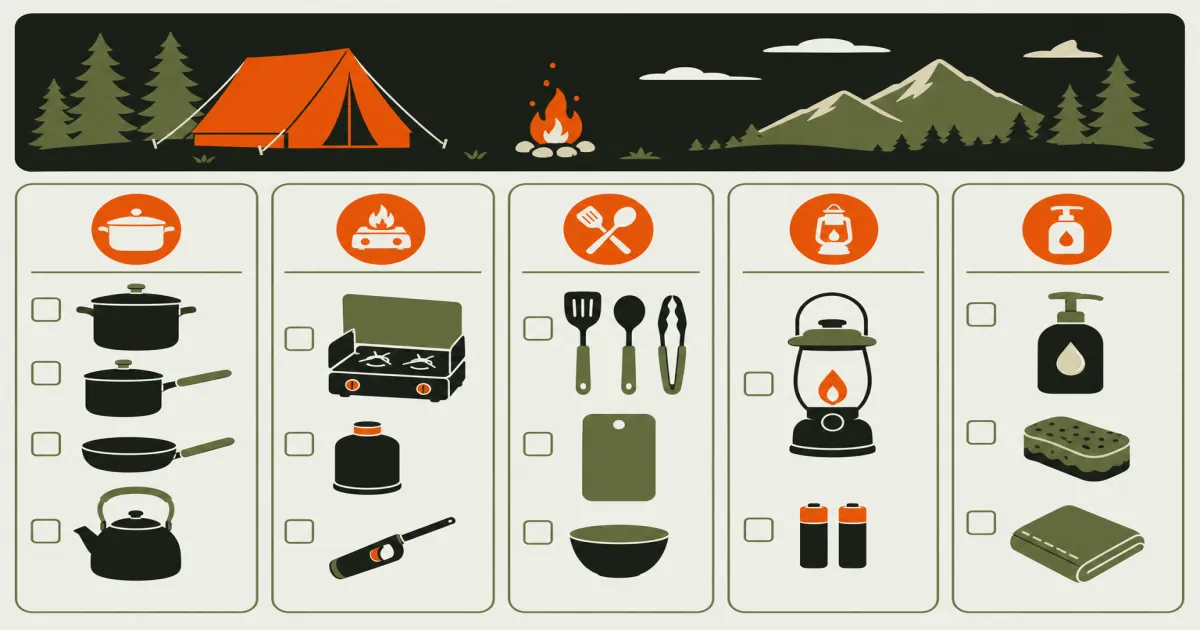
The short answer: A solid camping kitchen checklist covers four jobs: cook, eat, clean, and store. Pack for those jobs, then stop. Layout and bins come after the list is honest.
Forgetting the spatula ruins more camp dinners than a cheap stove. A written list beats memory when you load the car on Friday after work. This page is the gear list for weekend car camping. It is not a deep organization system. For zones and bin flow, use camp kitchen organization. For table and stove placement, use campsite kitchen setup. For nesting pots, see best camping pot set.
Cook: heat and pots
Start with the heat source. Pack a stove that matches the trip, fuel with a little reserve, and a backup lighter or matches. Piezo igniters fail. Keep ignition in the kitchen tote, not the glove box you forget to open.
Add a pot set with lids, a pan if your menus need it, and a stable way to set hot cookware down. A small cutting board and a sharp knife cover most prep. Bring tongs or a spatula, a spoon for stirring, and a can opener if any meals come from cans.
Optional but useful: a windscreen for gusty tables, a small bottle of cooking oil, salt, and two spices you actually use. Skip the twelve-jar rack until you know you miss it.
If you brew coffee at camp, add that kit here or in a labeled pouch. Soft-link mornings to your brew habit without turning this list into a pour-over class. Keep grounds cleanup with the wash items below.
Eat: plates, cups, and serving
Pack plates or bowls for everyone, plus one spare. Cups for coffee and water. Real utensils beat sporks for car camping unless you prefer ultralight theater. A serving spoon helps when one pot feeds the table.
Napkins or a cloth towel save shirts. A small tablecloth is optional. Prioritize wipeable surfaces over décor.
For kids or groups, add a labeled cup pouch so drinkware does not migrate into the stove zone. Keep snack plates separate from raw-prep boards if you handle meat.
Clean: wash and trash
Cleanup is half the kitchen. Pack at least one wash bin or collapsible sink, biodegradable camp soap, a sponge or cloth, a scraper, and trash bags. A second rinse bin speeds groups. A mesh strainer helps with gray water when you are not on a plumbed dump sink.
Pack a quick-dry towel for pots before they nest. A sealed pouch for wet sponges keeps the cook bin from smelling by Saturday night.
Do not treat trash as optional. Tie a bag to the table leg before you cook. Pack-out bags for grease and food scraps matter on sites without dumpsters.
Store: food, leftovers, and pack-out
Car camping kitchens need food storage that keeps raw and ready items apart. A cooler with ice, a drain plan, and a dry tote for non-perishables cover most weekends. Zip bags or containers for leftovers prevent the “open foil in the cooler” mess.
Bear and animal rules vary by site. Use provided lockers or approved canisters where required. At minimum, do not leave scented trash or dirty pans out overnight.
On pack-out, store damp wash gear separately from dry pots. Shake crumbs from totes before the drive home so the next Friday load-out starts clean.
Printable-style checklist by job
Use this as a load-out scan. Check items into the tote, not just in your head.
Cook
- Stove + fuel reserve
- Lighter or matches (backup)
- Pot set with lids (+ pan if needed)
- Knife + cutting board
- Spatula / tongs / stirring spoon
- Can opener (if needed)
- Oil, salt, 2–3 spices
- Optional: windscreen, coffee kit
Eat
- Plates or bowls (+1 spare)
- Cups
- Utensils
- Serving spoon
- Cloth or paper napkins
Clean
- Wash bin (+ rinse bin for groups)
- Biodegradable soap
- Sponge / cloth + scraper
- Trash bags
- Quick-dry towel
- Optional: strainer
Store
- Cooler + ice plan
- Dry food tote
- Leftover containers or zip bags
- Animal-safe storage per site rules
- Separate bag for damp gear on pack-out
Solo vs couple pack sizes
Solo weekenders can shrink the eat and wash lines: one bowl, one cup, one wash bin, one burner. Couples cooking eggs and pasta usually want two burners, two wash bins, and a wider prep board. Families add a grab pouch for cups and a clearer trash plan.
Match the list to the menu. Freeze-dried weekends drop half the cook line. Fresh-food weekends add cooler discipline. Do not pack a restaurant kit for boil-only meals.
How to use the checklist without bloat
Print or save the list in your notes app. After each trip, mark anything unused twice and remove it. Mark anything you borrowed from a neighbor and add it. Keep the master list short enough that you will actually read it on Friday.
Store the kitchen tote as a ready unit between trips. Refill fuel and soap when you get home, not when you are already late. That habit does more for reliability than buying a bigger tote.
When you are ready to improve pots or layout, browse sibling cookware guides from the Campsidepicks homepage. This checklist stays focused on what to pack, not which brand to buy.
Common checklist misses
Fuel reserve. Empty canisters happen mid-boil. Pack a backup can for weekends.
Backup ignition. One lighter is not a plan.
Trash bags. Always.
Something to put hot pots on. Picnic tabletops and vinyl covers hate bare heat.
Soap and scraper. Dirty nests smell. Scraping saves water.
Cooler drain awareness. Meltwater soaks food if you never tip the drain.
Bottom line
Build your camping kitchen checklist around cook, eat, clean, and store. Pack stove and pots, plates and cups, wash gear and trash bags, then cooler and dry storage. Trim anything you do not use. Layout guides and pot-set guides help after the list is honest and complete.
Frequently Asked Questions
What belongs on a basic camping kitchen checklist?
Stove and fuel, pots with lids, utensils, plates or bowls, cups, wash bin and soap, trash bags, and a way to store leftovers. Add coffee gear only if you brew at camp.
Do I need a dual-burner for a weekend?
Couples cooking real meals usually want two burners. Solo boil-and-eat menus can run on one. Match burners to menu, not to Instagram kitchens.
Should I pack a full spice kit?
Pack salt, oil, and two or three spices you will use. Giant spice racks waste space and spill in the tote.
How do I keep the checklist from growing forever?
Review after each trip. Remove anything unused twice in a row. Add only items you reached for and did not have.
Is a cooler part of the kitchen checklist?
Yes for car camping with fresh food. Treat ice, a drain plan, and raw-vs-ready separation as kitchen items, not afterthoughts.
What is the one item people forget most?
Trash bags and a lighter backup. Pots are memorable. Bags and ignition are easy to leave in the garage.