Tent Lighting Ideas: Soft Light Placement for Better Nights
Tent lighting ideas that favor soft placement over harsh beams: hang a dimmable lantern, bounce light off the ceiling, and keep a headlamp for hands-free tasks.
By Harper Lin
Campsidepicks is reader-supported. As an Amazon Associate we earn from qualifying purchases. Learn more.
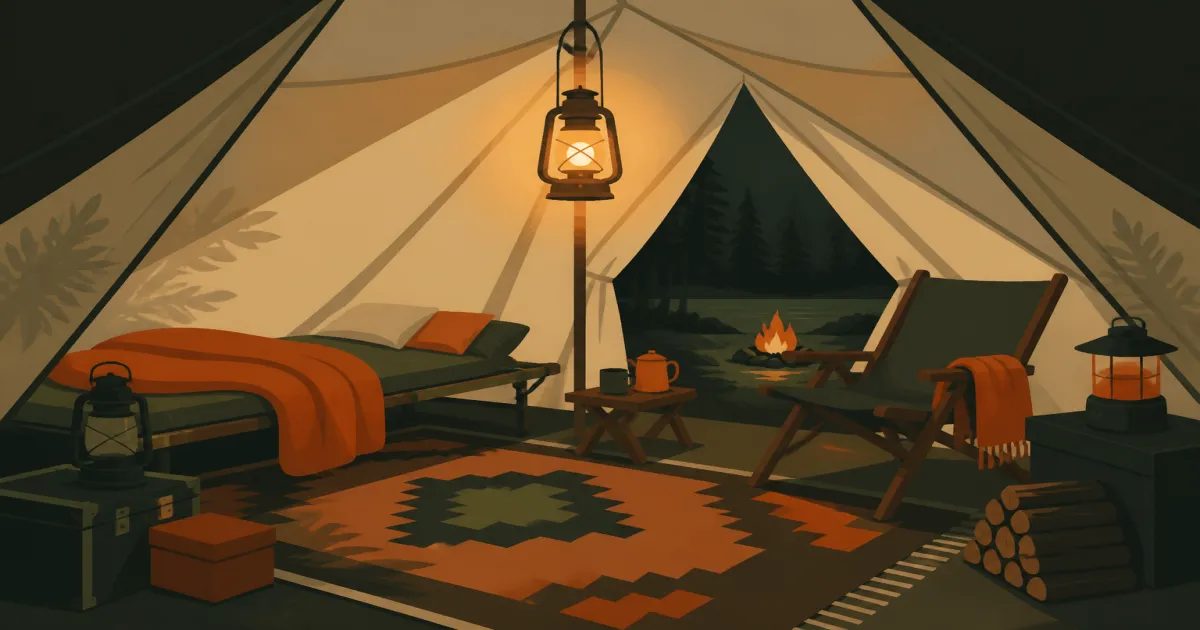
The short answer: Good tent lighting ideas start with a dimmable lantern hung high and centered, plus a headlamp for hands-free tasks. Soft placement beats a bright beam in someone’s eyes. Keep heat and open flame away from fabric.
Harsh tent light ruins evenings. One white blast in the corner makes the space feel smaller and keeps everyone squinting. Soft light is mostly placement and dimming, not a shopping spree.
This guide covers where to put light inside a tent, how to hang lanterns, and basic safety. For rechargeable lantern features and runtime tradeoffs, soft-link our best rechargeable camping lantern guide when you are ready to compare models. No pick stack here.
Soft light placement beats raw brightness
Aim for even, low glare. Hang the main light near the center of the ceiling so it washes the walls instead of spotlighting one sleeping pad. Dim first. Most modern lanterns are brighter than a tent needs on full power.
Warm or neutral white reads softer than icy blue light for winding down. If your lantern has modes, save the brightest setting for finding a dropped contact lens, not for card games at 10 p.m.
Bounce light when you can. Aim a lantern upward toward the fabric ceiling so the tent itself becomes a diffuser. Avoid pointing a bare LED panel straight at faces across a narrow vestibule.
Lantern hanging that actually works
Use the loop or gear loft your tent already has. A short carabiner or cord keeps the lantern stable when someone bumps a pole. Centered hangs reduce harsh shadows under the eaves.
Keep housings off fabric. Even “cool” LEDs can warm a shell in a small tent, and older lanterns with hot tops can damage nylon. Leave a gap. Do not bury a lantern in a stuff sack for diffusion while it is on.
If your tent lacks a loop, a carefully placed strap at the hub may work on some designs. Do not crush poles or block vents. A freestanding lantern on a small flat stuff sack in the middle of the floor is a fallback, but it is easier to kick. Hanging is cleaner when the tent supports it.
For couples, one shared overhead light plus two headlamps beats two competing lanterns in opposite corners.
Headlamps as backup, not as the only plan
A headlamp is perfect for packing, late bathroom walks, and reading without lighting the whole tent. It is a weak main light because the beam follows your face and blinds whoever you look at.
Use red mode or low white when others are asleep. Aim at the floor or your own gear. Keep the headlamp in the same pocket every night so you are not digging under quilts in the dark.
A small clip light on a gear loft can play the same role as a mini lantern. Still dim it. Still keep heat off fabric.
Heat, batteries, and safety notes
No open flames in the tent. Candle lanterns, fuel lanterns, and stoves belong outside living space. Carbon monoxide and fire risk are not theoretical in sealed nylon.
Watch battery lanterns for heat on high. If the body is uncomfortable to hold, lower the mode or move it farther from bags and walls. Charge power banks outside sleeping bags. Li-ion packs prefer cool, dry pockets in a tote, not under a pillow.
Ventilation still matters when you are glowing LEDs. Crack a vent so moisture from breath does not turn the tent into a damp cave. Light does not replace airflow.
Keep a backup light in a known place. One dead lantern should not strand you. A phone flashlight works in a pinch and drains the battery you wanted for morning.
Table light vs tent light
Picnic-table brightness and tent softness are different jobs. A loud lantern that is perfect for cooking can feel like a stadium inside a two-person tent. If you only own one light, dim it hard when you move inside, or hang it higher and bounce it.
Many campers keep a compact dimmable lantern for the tent and a brighter light for the kitchen zone. That split is one of the simplest tent lighting ideas that improves sleep quality without new rituals or fancy gear.
If coffee runs late at the table, soft-link brew habits to your kitchen guides and keep the tent dark enough for people already turning in. Do not turn the sleeping space into a second cook station.
Common lighting mistakes
Full power all night. Dim. Your eyes adapt.
Lantern on the sleeping bag. Heat and tip risk. Hang it or set it on a clear patch of floor.
Two headlamps dueling. Agree on overhead light for shared time, headlamps for solo tasks.
String lights everywhere on night one. Fine if they are low-heat LEDs rated for the job. Skip tangled setups that block exits.
Ignoring exit path light. Keep a low glow or a known headlamp so nobody tramplings gear to find the door zipper.
Simple setups by trip type
Solo backpacking tent: one small hanging lantern or clip light on low, headlamp for packing.
Couple car-camp tent: one dimmable overhead lantern, two headlamps, optional warm fairy-light strand kept off fabric and exits.
Family tent: overhead lantern plus a floor-level night light near the door on the lowest mode. Assign kids headlamps with a “point at the ground” rule.
For more on runtime, charging, and lantern features (without a forced shopping list on this page), see the rechargeable lantern guide and browse other camp accessory notes from the Campsidepicks homepage.
Bottom line
The best tent lighting ideas are practical: hang a dimmable lantern high and centered, bounce light when you can, keep a headlamp for hands-free tasks, and keep heat and flame away from fabric. Soft placement beats raw brightness for sleep and for sharing a small tent without glare.
Frequently Asked Questions
What are the best tent lighting ideas for reading?
Hang a dimmable lantern from a ceiling loop or gear loft so light spreads instead of blasting one corner. Keep brightness low enough that you can see pages without waking everyone.
Should I use a headlamp inside the tent?
Yes as a backup and for packing. Use red mode or aim at the floor when others are sleeping. A headlamp is a poor main light if it keeps sweeping across faces.
Is it safe to use candle lanterns in a tent?
Open flame inside a tent is a bad idea. Hot glass and tipped candles start fires and melt fabric. Prefer battery or rechargeable lanterns designed for indoor camp use.
Where should I hang a lantern?
Use a built-in loop, gear loft, or a short strap from a pole hub if the maker allows. Keep hot LED housings off fabric and sleeping bags. Centered and slightly high usually softens shadows.
How do I avoid harsh white light?
Dim the lantern, use a warmer color temperature if available, or bounce light off the ceiling with the lamp aimed upward. Direct beams feel like a garage.
Do I need a separate lantern for the picnic table?
Often yes. Table light and tent light have different jobs. A bright table lantern can be too much for sleeping space. Split the roles when you can.