How to Wash Dishes Camping: Leave-No-Trace Cleanup
How to wash dishes camping without fouling the creek: scrape first, use a two-bin wash, strain gray water, and keep soap far from natural water.
By Alex Turner
Campsidepicks is reader-supported. As an Amazon Associate we earn from qualifying purchases. Learn more.
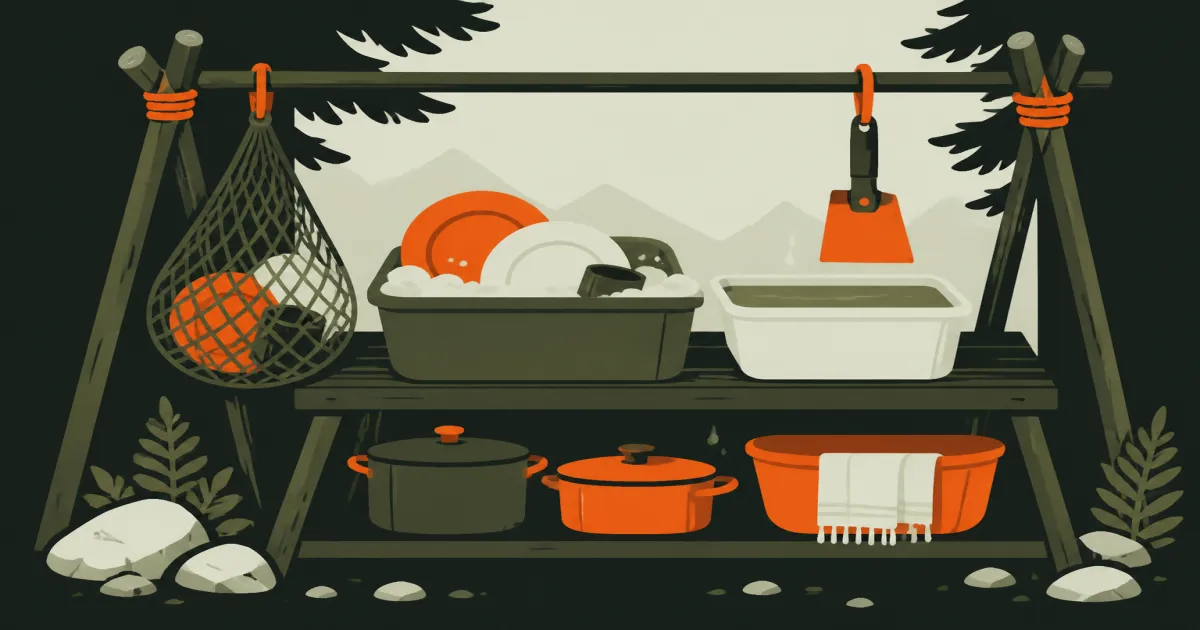
The short answer: How to wash dishes camping the leave-no-trace way is scrape into trash, wash in a bin with little soap, rinse, strain gray water, and keep soap far from lakes and streams. Never scrub in the creek.
Dirty plates at camp are normal. Grease in the river is not. Most dish mistakes come from washing where it is convenient instead of where it is allowed. A simple bin system fixes that without turning cleanup into a second dinner.
This page covers field dishwashing and gray water. For pot coatings, burnt food, and home finishing, use how to clean camping cookware. For where wash bins sit relative to stove and prep, see campsite kitchen setup.
Scrape before you touch water
Start while food is still soft. Scrape plates, pots, and pans into a trash bag with a spatula or silicone scraper. Pasta water, bacon grease, and oatmeal leftovers do not belong on the ground next to the table.
Cold grease is harder than warm grease. If dinner ran late, at least fill greasy pots with a little water so morning cleanup is a soak, not a chisel job. Keep a dedicated scrape bag so crumbs do not migrate into the cook bin.
Skipping scrape is how rinse water turns into soup. The more solids you remove first, the less soap and water you need.
Wash and rinse bins
Set two bins or collapsible sinks on the wash end of the table. Bin one: hot water and a few drops of biodegradable camp soap. Bin two: clear rinse water. Wash, then dunk in rinse. Change rinse water when it clouds.
Heat water on the stove after the meal if you can. Warm water cuts grease with less scrubbing. Keep the sponge and soap in a sealed pouch so they do not perfume the pot stack.
One bin works for solo trips if you scrape hard and wipe with a cloth after the soapy pass. Groups almost always want two bins. Assign dish duty before cooking so the pile does not grow while people wander to the fire.
Soap distance and water sources
Soap belongs in a wash bin on land, not in a lake. Even biodegradable formulas can harm aquatic life and leave films. A widely taught leave-no-trace habit is to keep washing and gray-water disposal at least 200 feet from natural water. That is roughly seventy adult paces. Local rules win when signs say otherwise.
Do not dump soapy water at the tent door. Smells and food residue attract animals. Keep wash downwind from sleeping areas when you can.
If the campground has a dish sink or gray-water station, use it. Posted infrastructure beats improvising next to a creek.
Gray water without a mess
Strain food particles out of wash and rinse water into the trash. Broadcast the strained liquid over a wide patch of soil away from camp and water, or pour it into an approved dump if the site provides one. Do not create a greasy puddle in one spot.
Pack a small mesh strainer or use a bandana you are willing to wash later. Solids in trash are easier to manage than solids in soil next to popular sites.
Never pour grease into a vault toilet unless rules explicitly allow it. Most do not want cooking oil in the system. Bag grease with trash when in doubt.
Low-water and multi-day rhythms
When water is limited, scrape, wipe with a barely damp cloth, and save full washes for cookware that must nest clean. Paper towels for greasy pans can be worth the pack space on dry sites. Bag used towels with trash.
Multi-day trips: full wash when water allows, scrape-and-wipe minimum on dry nights, and a better wash before pack-out so the trunk does not ferment. Rotate dish duty. Shared kits stay cleaner when cleanup is named, not assumed.
Finish deep scrubbing at home for burnt sugar and stuck cheese. Field washing is about food safety, animal attraction, and nestable pots, not restaurant shine every night.
Tools worth packing
Pack a scraper, sponge or cloth, biodegradable soap in a leak-proof bottle, two bins or one bin plus a wipe cloth, trash bags, and a strainer. Optional: a quick-dry towel and a bottle brush for mugs.
Skip steel wool on nonstick coatings. Soft scrubbers preserve pans you want to keep. Keep matches and soap separate so your coffee does not taste like detergent tomorrow.
A collapsible sink that clips to the table edge saves back strain. It still needs the same scrape-wash-rinse logic.
Common dishwashing mistakes
Washing in the lake “because the soap is green.” Still no. Distance and bins matter.
Dumping pasta water at the tent. Animals notice. Use trash and proper gray-water habits.
Too much soap. A few drops go far. Excess soap means more rinse water and more residue.
No scrape step. You waste water and leave food film on everything.
Sealing wet dishes in a closed bin. Smell follows. Air-dry or bag damp items apart from dry cookware.
Leaving the wash station in the prep zone. Dirty water next to cutting boards is a food-safety fail. Keep wash on its own end of the table.
Tie-in to kitchen layout
Dishwashing works better when the wash zone already exists. Claim table space before you cook. Keep trash tied to a table leg. Put the stove and wash ends far enough apart that hot pots are not swinging over soapy water.
If you are building the whole kitchen from scratch, start with the setup guide, then come back to this wash sequence. Soft product browsing for cookware and stoves lives on the Campsidepicks homepage when you are ready to upgrade bins or pots.
Bottom line
How to wash dishes camping without leaving a mess: scrape into trash, wash with little soap in a bin, rinse, strain gray water onto soil far from water sources, and follow site rules. Keep soap out of lakes and streams. Dry gear before it nests, and finish stubborn grease at home.
Frequently Asked Questions
How far from a lake or stream should I wash dishes?
Follow local rules. A common leave-no-trace baseline is at least 200 feet (about 70 adult steps) from natural water when you use soap or dump strained gray water on land.
Do I need biodegradable soap?
Use a camp-safe biodegradable soap outdoors, and still keep it away from water sources. “Biodegradable” does not mean dump-it-in-the-creek safe.
Can I wash dishes in the lake?
No. Do not soap or scrub in lakes, rivers, or streams. Food bits and grease harm water quality and attract animals to popular sites.
What do I do with gray water?
Strain food particles into trash. Broadcast the strained water over a wide area of soil away from camp and water, or follow posted campground rules for dump sinks.
Is one bin enough?
One soapy bin works in a pinch if you scrape hard first. Two bins (wash and rinse) stay cleaner and finish faster for groups.
What if water is scarce?
Scrape thoroughly, wipe with a damp cloth, and bag greasy messes for home. Prioritize cleaning cookware that will nest overnight.