Camp Stove Fuel Types: Canister vs Liquid Fuel Explained
Camp stove fuel types split into canister gas and liquid fuel. Canisters win most weekend trips. Liquid fuel wins cold weather and long expeditions.
By Harper Lin
Campsidepicks is reader-supported. As an Amazon Associate we earn from qualifying purchases. Learn more.
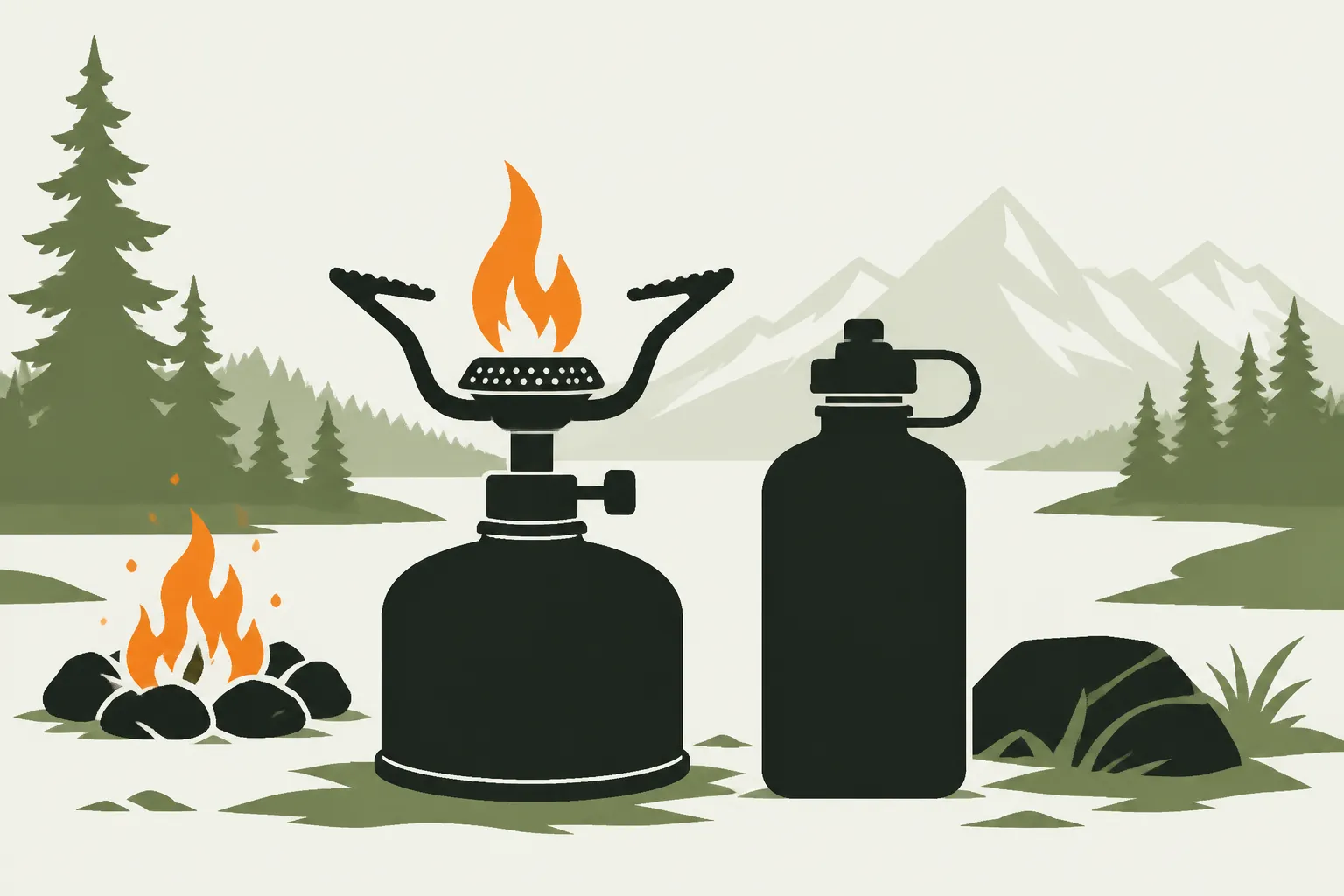
The short answer: Camp stove fuel types boil down to canister gas for most US weekend trips and liquid fuel when cold, altitude, or long mileage matter. Match fuel to the stove you own, not the fuel your friend swears by.
Buy the wrong fuel and the stove never leaves the trunk. Canister stoves need threaded isobutane-propane canisters. Liquid-fuel stoves need white gas or approved alternatives in a refillable bottle. Propane cylinders feed larger car-camp two-burners. Mixing types is not a hack. It is a safety problem.
This guide explains camp stove fuel types in buyer terms. For burner picks, start with our best camping stove guide. For where the stove sits at the site, see campsite kitchen setup.
Canister fuel: the weekend default
Screw-on canisters contain a blend of isobutane and propane. The mix keeps pressure reasonable in cool mornings and hot afternoons. Canister stoves light fast, pack small, and need almost no maintenance between trips.
Availability is the other win. Outdoor shops, grocery stores near parks, and big-box retailers stock common sizes in most US camping regions. For two-night car camps and trail weekends above freezing, canister fuel is the sensible default.
Tradeoffs appear when temperatures drop. Upright canister stoves lose pressure as the canister chills. Wind steals heat. Very large pots on tiny burners waste fuel. Those limits are real, not marketing fear.
Liquid fuel: cold, distance, and flexibility
Liquid-fuel stoves burn white gas or other approved liquids from a refillable bottle. You pump pressure, prime the line, and maintain the stove more than you would a canister head. The payoff is reliable heat in cold weather and at altitude.
International travelers like liquid fuel because white gas or kerosene may be easier to find than specific canister brands abroad. Long backpacking trips also favor refillable bottles when you can measure exactly how much fuel remains.
The cost is complexity. Priming spills happen. O-rings need occasional care. You must read the stove manual and practice at home before a remote trip. Liquid fuel is a skill, not a convenience upgrade.
Propane for car-camp stoves
Many dual-burner camp stoves use disposable propane cylinders or a hose to a larger tank. Propane is stable, familiar, and fine for picnic-table cooking. It is heavy and bulky relative to trail canisters, which is acceptable when the stove rides in a car.
Do not assume propane cylinders work on backpacking canister stoves. Threading, pressure, and stove design differ. Buy the fuel type printed on your stove label.
Side-by-side comparison
| Factor | Canister | Liquid fuel | Propane (car camp) |
|---|---|---|---|
| Ease of use | High | Moderate | High |
| Cold weather | Moderate | Strong | Strong |
| Pack weight | Low | Moderate | N/A (car carry) |
| Maintenance | Low | Higher | Low |
| US weekend availability | Excellent | Good at outdoor shops | Excellent |
| Best trip fit | Trail + mild car camp | Cold/alpine/long haul | Car camp groups |
Matching fuel to your stove model
Your stove dictates fuel. A Jetboil or MSR PocketRocket needs canisters. An MSR WhisperLite or similar needs liquid fuel and priming practice. A Coleman Classic needs propane. Adapter fantasies usually end at the return counter.
Read the manufacturer fuel list before you buy spare bottles at the trailhead. Some stoves allow multiple liquid fuels. Others are strict. Using unapproved fuel voids safety assumptions and can clog jets.
Cold weather and altitude notes
In shoulder-season mountains, upright canister performance drops. Tricks like warming the canister in a jacket help briefly. Remote canister stoves that feed fuel through a hose, or inverted setups designed for cold, perform better than basic screw-on heads alone.
Liquid fuel stays useful when canisters sputter. If your trips regularly hit freezing nights, plan fuel before you plan dinner menus. Boil times stretch and meal schedules slip when heat is weak.
Storage, transport, and disposal
Transport canisters upright with valve caps on. Keep fuel out of hot closed spaces when possible. Never puncture canisters to "empty" them for trash. Check local rules for empty canister disposal.
Liquid fuel bottles must seal tight and ride outside living spaces when regulations require. Label bottles so white gas does not get mistaken for water. At home, store fuel cool and away from ignition sources.
Common fuel mistakes
Buying fuel before the stove. Stove first, fuel second.
Assuming one canister fits every trip. Group chili night burns more gas than instant oatmeal mornings.
Ignoring wind. Wind is a fuel thief on any type. Use screens and site layout from your kitchen setup plan.
Skipping a backup ignition source. Fuel does not matter if you cannot light it.
Mixing stove types on one trip without planning. Two fuel systems mean two resupply problems. Simplify when you can.
Planning fuel for trip length
Count meals and boils, not just nights. Coffee every morning, pasta both dinners, and morning oatmeal burn more fuel than freeze-dried lunch alone. For canister trips, bring a partial second canister when resupply is uncertain.
Liquid-fuel users can measure bottle fill level before leaving. Mark the bottle with tape at home if you want a visual gauge mid-trip. Either way, a spare lighter matters more than a spare ounce of optimism.
Bottom line
Camp stove fuel types are not a personality test. Canisters win most US weekend camping for ease and availability. Liquid fuel wins cold, remote, and long trips when you accept maintenance. Propane wins car-camp two-burner cooking. Match fuel to your stove, pack a little extra for cold nights, and practice with liquid systems at home before you trust them at altitude.
Frequently Asked Questions
What are the main camp stove fuel types?
For most US campers, the choice is screw-on isobutane-propane canisters vs liquid fuel such as white gas in a refillable bottle. Propane canisters for larger two-burner stoves are a third common type for car camping.
Which fuel works best in cold weather?
Liquid fuel and inverted or remote canister setups handle cold better than upright screw-on canisters alone. Below freezing, canister pressure drops and boil times stretch.
Can I mix fuel brands?
Use the fuel type and canister threading your stove maker specifies. Do not put liquid fuel in a canister stove or vice versa.
How do I store camp fuel in a vehicle?
Keep canisters upright, away from direct sun and heat sources. Ventilate the area. Never store fuel inside a hot closed car trunk for hours if you can avoid it.
Are canisters recyclable?
Rules vary by location. Many areas treat empty canisters as hazardous waste. Check local recycling or outdoor shop take-back programs before you throw them in curbside bins.
How much fuel for a weekend?
Most couples on a canister stove use one small canister for a two-night weekend of boils and simple meals. Cold weather and group cooking need more. Pack a partial spare when resupply is uncertain.