Aluminum vs Titanium Camping Cookware: Which Metal Wins?
Aluminum vs titanium cookware comes down to weight, heat speed, and budget. Titanium wins ounces. Aluminum wins price. Stainless still rules heavy car camp.
By Alex Turner
Campsidepicks is reader-supported. As an Amazon Associate we earn from qualifying purchases. Learn more.
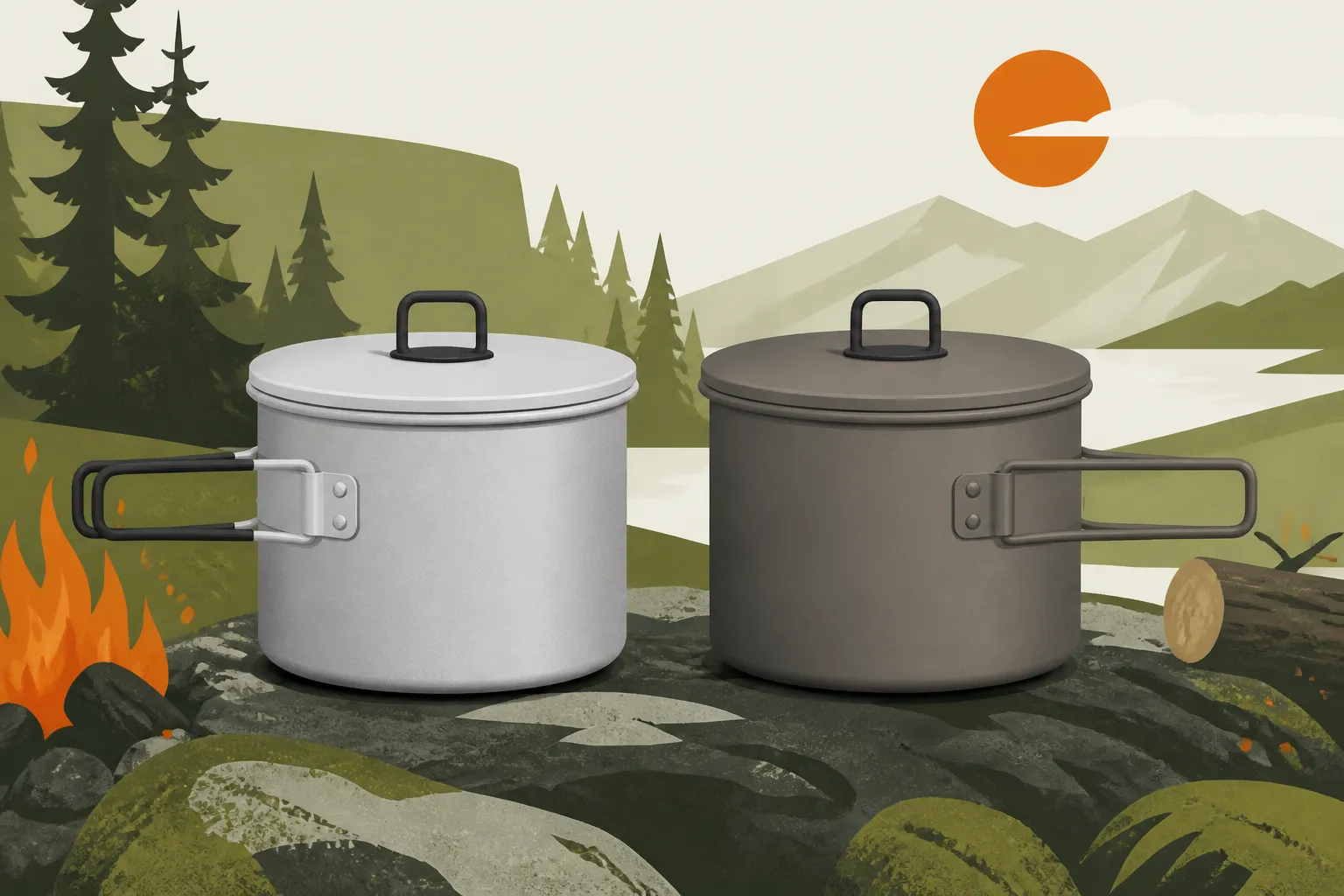
The short answer: In aluminum vs titanium cookware for camping, titanium wins weight and toughness per ounce. Aluminum wins cost and often heats faster. Stainless still makes sense when the kit lives in a trunk and never sees a mile of trail.
Shopping for camp pots turns into a metals debate fast. Marketing loves titanium photos next to mountain sunrises. Reality is simpler: pick the metal that matches how far you carry the kit and how hard you treat it.
This page covers aluminum vs titanium cookware for outdoor use, with a brief stainless note for car campers. For nested sets, see best camping pot set. For trail-weight kits, see best backpacking cookware.
Why material matters at camp
Camp cookware sees heat spikes, packed nesting, and scrubbing with limited water. Home kitchen rules about "nice pans" do not apply. Weight matters on trail. Dent resistance matters in a bin full of stove parts. Heat speed affects fuel use when every boil counts.
Material also drives price. Titanium costs more upfront. Aluminum saves dollars that you can spend on fuel or a better stove. Neither is "best" without a trip context.
Aluminum: fast heat and friendly price
Hard-anodized aluminum is the workhorse of camping cookware. It heats quickly, which saves fuel on short boils. It costs less than titanium, so beginners can buy a full nested set without wincing.
Aluminum kits often include nonstick coatings for easier eggs and cleanup. Treat coatings gently. Metal forks and tight nesting against stove parts scratch them fast.
Downsides: aluminum dents more easily than titanium in pure abuse tests, and very thin walls can warp under careless high heat. For car camping and moderate trail use, those limits rarely end a trip.
Titanium: ounces and durability
Titanium saves weight. That is the main reason thru-hikers and weekend backpackers pay premium prices. It resists corrosion and handles being nested inside a pack for days.
Titanium does not distribute heat as evenly as aluminum on some thin pots. You may need more stirring and moderate flame to avoid hot spots. Handles still get hot. Use a gripper or pot cozy as designed.
For car camping only, titanium is often overspend. For anything you carry more than a few minutes from the parking lot, the weight savings add up across a season.
Stainless steel: the car-camp wildcard
Stainless is not the headline fight in aluminum vs titanium cookware, but it belongs in the conversation. Stainless pot sets tolerate metal utensils, higher heat, and family chaos better than coated aluminum.
Weight is the knock. A stainless nested set that feels fine in the kitchen feels heavy at a walk-in site. Many campers own stainless for car trips and aluminum or titanium for trail trips. That split is normal.
Comparison at a glance
| Factor | Aluminum | Titanium | Stainless |
|---|---|---|---|
| Weight | Light | Lightest | Heavier |
| Heat speed | Fast | Moderate | Slower |
| Durability | Good | Excellent | Excellent |
| Cost | Lower | Higher | Mid to high |
| Best fit | Trail + budget car camp | Ultralight trail | Car camp, groups |
Nonstick and coatings
Most "nonstick camp cookware" is aluminum underneath. Coating helps sticky foods and quick cleanup when water is scarce. It fails when gouged or overheated empty.
If you cook eggs every morning, nonstick aluminum may beat bare titanium for convenience. If you mostly boil water, bare metal is fine and one less thing to worry about.
Choosing for your trip type
Weekend backpacking: Titanium or aluminum depending on budget. See our backpacking guide for nested sizes that fit canister stoves.
Car camping with short walks: Aluminum or stainless pot sets. Weight in the trunk rarely matters.
Mixed trips: One trail pot you trust beats three mediocre pans. Do not buy titanium car-camp sets because they look serious.
Boil-only menus: Thin single-wall titanium or aluminum mugs are enough. Save coated skillets for trips where you actually fry food.
Care habits that extend any metal
Avoid heating empty pots on high flame. Use the gripper or handle system the maker designed. Nest with a cloth between pieces if coatings touch stove parts. Dry before storage so lids do not trap moisture.
Material choice matters less if you scorch every meal and cram wet gear into a sealed bin. Basic care beats upgrading metal every year.
Price and long-term value
Aluminum kits often land under fifty dollars for a usable nested set. Titanium singles and duos cost more per ounce saved. Ask whether you will carry the pot far enough to justify the premium. Many campers own both over time instead of forcing one metal to do everything.
Stainless sets sit in the middle on price but last years of trunk abuse. Factor replacement cost when nonstick coatings fail on budget aluminum bundles. Sometimes a mid-tier stainless set outlasts two coated sets.
For solo hikers, a single titanium pot may be the only purchase you need for years. For families, a stainless nested set with a real fry pan often beats chasing ultralight specs nobody carries from the car.
Bottom line
Aluminum vs titanium cookware is a weight-and-budget trade, not a moral choice. Titanium wins when ounces matter and you accept the price. Aluminum wins fast heat and value for most campers. Stainless still rules heavy car-camp kits where abuse beats ultralight dreams. Match metal to carry distance and menu, then buy nested sizes that fit your stove.
Frequently Asked Questions
Is titanium cookware worth the extra cost?
For backpacking where every ounce matters, often yes. For car camping where weight rides in a trunk, aluminum or stainless usually offers better value.
Does aluminum react with acidic foods?
Untreated aluminum can react with very acidic ingredients over long simmers. Most camping aluminum is hard-anodized, which reduces that issue. Short camp meals rarely cause problems.
Is titanium harder to cook on?
Titanium can develop hot spots if flame is too concentrated. Use moderate heat and stir. Aluminum often feels more forgiving for beginners because it spreads heat quickly.
What about nonstick coatings?
Nonstick is usually aluminum underneath. It helps eggs and cleanup but needs soft utensils and careful packing. Coating damage is permanent.
When should I pick stainless instead?
Car camp abuse, high-heat searing, and family kits where weight does not matter. Stainless handles dents and metal utensils better than thin nonstick.
Can I mix metals in one kit?
Yes. Many campers use titanium on trail and stainless at the car. Just match pot size to stove flame so you do not waste fuel.